
The quick answer
Most small businesses do not need an enterprise help desk. They need one place where customer emails, chat messages and follow-ups stop disappearing.
For that job, Help Scout is the best default pick. It feels like email to customers, gives the team a proper shared inbox, and adds docs and reporting without turning support into a maze.
Choose Zendesk when support is already a department. Choose Intercom when chat and in-product messaging are central to your business.
The shortlist

A customer-friendly shared inbox with docs, light automation and reporting that small teams can actually maintain.
Open Help Scout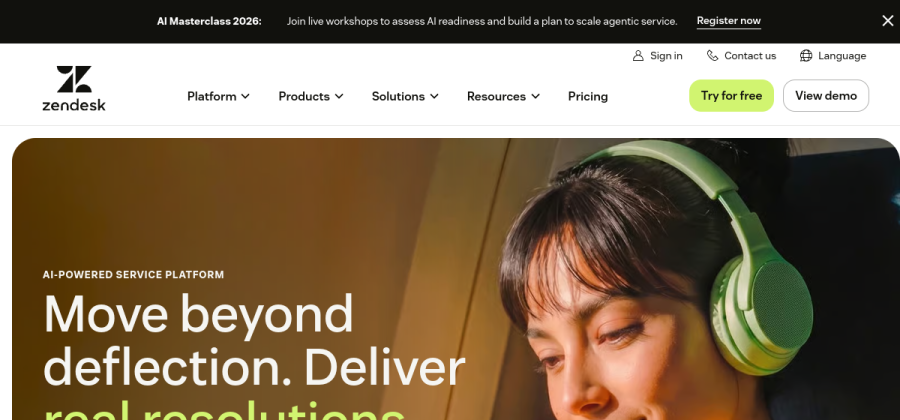
A mature support suite with robust ticketing, routing, reporting and ecosystem depth for teams that need operational control.
Open Zendesk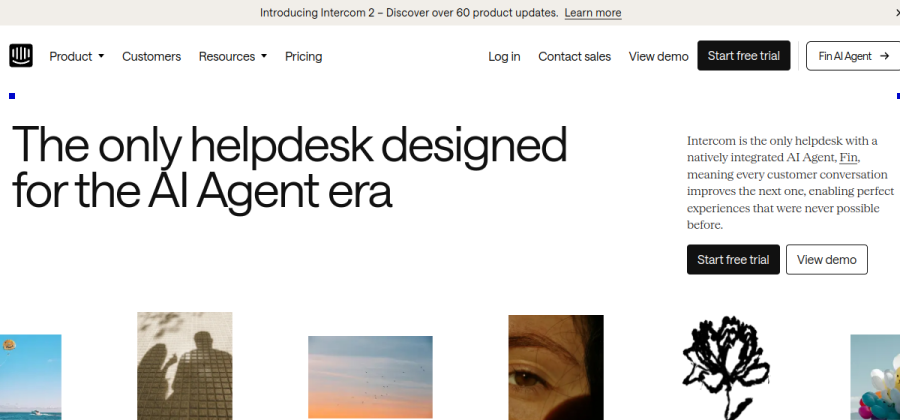
Customer messaging, live chat, bots and support workflows aimed at SaaS and product-led companies.
Open Intercom
Feature-rich help desk software with ticketing, automations, knowledge base and accessible entry pricing.
Open Freshdesk
Affordable live chat and shared inbox software for very small teams that want simple customer conversations.
Open CrispSupport software gets expensive through seats, AI add-ons and messaging volume. Check plan limits before moving every mailbox and chat widget.
How to pick
Help desk tools look similar until you ask what “support” means in your business.
Is it mostly email? Mostly live chat? Mostly product questions? Mostly recurring customer success work? The answer changes the winner.
- 1Mostly customer emailStart with Help Scout. It keeps support human while giving the team structure.
- 2High volume or complex routingEvaluate Zendesk or Freshdesk. You will want stronger queues, views and reporting.
- 3Product-led SaaS supportEvaluate Intercom. Chat, bots and in-app messaging matter more than pure ticketing.
- 4Tiny team, mostly chatCrisp can be enough, especially if budget and simplicity matter most.
Where Help Scout wins
Help Scout is built around the idea that customers should feel like they are emailing a person, not filing a ticket into a machine.
That makes it a strong fit for agencies, service businesses, online shops and small SaaS teams that care about support quality but do not need a giant support operations layer.
The shared inbox is clean, Docs handles a simple knowledge base, and the reporting is enough to spot trends without creating a dashboard hobby.
Use Help Scout when support is important, but the team still wants a calm tool.
Where Zendesk wins
Zendesk is the serious operations pick.
It is better when support has tiers, queues, SLAs, supervisors, macros, routing rules and reporting needs that outgrow a friendly shared inbox. It can also become too much too early.
Small teams should not buy Zendesk because it is famous. Buy it when the operational complexity is real and someone owns the setup.
Where Intercom wins
Intercom is strongest when support happens inside the product experience.
SaaS companies use it for chat, onboarding messages, proactive support, help center content and increasingly AI-assisted conversations. If your customers spend time logged into your product, Intercom can make sense earlier than a traditional ticketing tool.
The pricing and feature packaging can surprise small teams, so model your expected seats and conversation volume before committing.
Where Freshdesk and Crisp fit
Freshdesk is a practical middle option: broad features, approachable pricing and enough structure for teams that want a classic help desk without jumping straight to Zendesk.
Crisp is best for very small teams that mostly want live chat, a shared inbox and simple customer messaging. It is not the deepest help desk here, but it can be exactly enough.
What small teams should care about
Ignore enterprise feature grids at first. These are the features that change day-to-day support:
- Collision detection. Two teammates should not answer the same customer at the same time.
- Private notes. Internal context should stay out of customer replies.
- Saved replies. Repeated answers should be fast without sounding robotic.
- Assignment and status. Every conversation needs an owner and a next state.
- Searchable history. The next teammate should see what happened last time.
- Knowledge base. The best support ticket is the one the customer never has to send.
If your current process cannot do those six things, a help desk will pay for itself quickly.
When email alone is still fine
Email can work if one person handles all support and volume is low.
The moment two people share support, email starts to leak. Replies duplicate, customer history hides in one inbox, and there is no reliable way to know what is waiting.
That is usually the right time to move.
Pair help desk with CRM carefully
Support data gets more useful when it connects to customer context. If a high-value customer has three unresolved support threads, sales and account owners should know.
You do not need a complex integration on day one. Start by making sure customer names, companies and email addresses are consistent between your help desk and CRM.
If the CRM side is still messy, read how to choose a CRM for small business before building elaborate support automations.
FAQ
What is the best help desk for a tiny team?
Help Scout is the best default if most support happens by email. Crisp is worth a look if chat is the main channel and budget is tight.
Is Zendesk too much for small business?
Sometimes. Zendesk is excellent when support complexity is real. For a very small team with simple needs, it can be more process than benefit.
Should customer support live in the CRM?
Only at very low volume. Once multiple people answer customers, a dedicated help desk usually gives better ownership, history and reporting.
The shortlist at a glance
| Tool | Best for | Verdict |
|---|---|---|
| Help Scout | Small teams that want a clean shared inbox, knowledge base and human support feel. | Top pick |
| Zendesk | Growing teams that need mature ticketing, reporting and support operations depth. | Alternate pick |
| Intercom | SaaS and product-led teams that want chat, bots and customer messaging in one place. | Alternate pick |
| Freshdesk | Small businesses that want broad help desk features at approachable pricing. | Alternate pick |
| Crisp | Tiny teams that want affordable live chat, shared inbox and simple customer messaging. | Alternate pick |